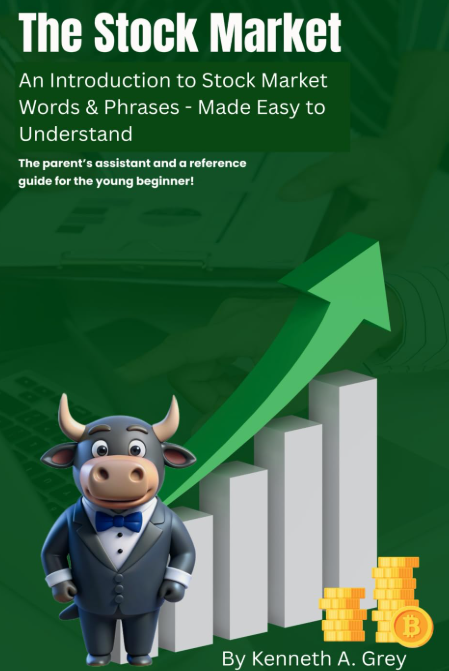
Basics
Stock Market Basics: 10 Terms Every Beginner Must Know

Master These 10 Terms and You're Already Ahead of 90% of People! 🚀
Starting to learn about investing? These 10 essential terms will give you the foundation you need to understand the stock market like a pro.
1. Stock (Equity) 📊
What it means: A piece of ownership in a company In simple terms: If Apple has 1 billion shares and you own 1 share, you own 0.000001% of Apple! Example: Buying 10 shares of Disney means you own a tiny piece of Mickey Mouse's empire.
2. Dividend 💰
What it means: Cash payments companies make to shareholders In simple terms: Like getting paid rent for letting a company use your money Example: Coca-Cola pays about $1.68 per share annually. Own 100 shares = $168/year in your pocket!
3. Market Capitalization (Market Cap) 🏢
What it means: The total value of all a company's shares Formula: Stock Price × Number of Shares Outstanding Categories:
- Large-cap: $10B+ (Apple, Microsoft)
- Mid-cap: $2B-$10B (growing companies)
- Small-cap: Under $2B (newer, riskier companies)
4. P/E Ratio (Price-to-Earnings) 📈
What it means: How much you pay for each dollar of company earnings Formula: Stock Price ÷ Earnings Per Share Example: If a stock costs $50 and earns $5/share, P/E = 10. You're paying 10x earnings. Rule of thumb: Lower P/E might mean good value (or trouble!)
5. Bull vs. Bear Market 🐂🐻
Bull Market: Prices generally rising, optimism high Bear Market: Prices falling 20%+ from recent highs, pessimism rules Memory trick: Bulls thrust UP with their horns, Bears swipe DOWN with their claws
6. Volatility 🎢
What it means: How much a stock's price bounces around High volatility: Big price swings (Tesla, crypto stocks) Low volatility: Steady, predictable movement (utility companies) For beginners: Start with lower volatility stocks to sleep better at night!
7. Dollar-Cost Averaging (DCA) 📅
What it means: Investing the same amount regularly, regardless of price Example: Buying $500 of S&P 500 every month for a year Why it works: You buy more shares when prices are low, fewer when high Perfect for beginners: Removes emotion and timing stress!
8. Diversification 🌈
What it means: Don't put all your eggs in one basket Example: Instead of buying only tech stocks, spread across:
- Technology (Apple, Google)
- Healthcare (Johnson & Johnson)
- Consumer goods (Procter & Gamble)
- International companies
9. ETF (Exchange-Traded Fund) 📦
What it means: A basket of stocks you can buy as one investment Example: Buying VTI gives you pieces of 4,000+ companies instantly Benefits: Instant diversification, low fees, easy to understand Perfect for beginners: Professional diversification without the work!
10. Compound Interest (The 8th Wonder of the World!) ⚡
What it means: Earning returns on your original investment PLUS previous returns Example:
- Year 1: Invest $1,000, earn 10% = $1,100
- Year 2: Earn 10% on $1,100 = $1,210
- Year 3: Earn 10% on $1,210 = $1,331 The magic: Time turns small amounts into fortunes!
How These Terms Work Together:
Imagine you're using dollar-cost averaging to buy a diversified ETF with a reasonable P/E ratio. During bear markets, you're buying more shares at lower prices. When bull markets return, your compound interest accelerates. Some holdings pay dividends for extra income, and you sleep well because you chose lower volatility investments.
That's investing in one paragraph! 🎯
Test Your Knowledge:
- If a company has 1 million shares trading at $50 each, what's the market cap?
- Would you rather buy a stock with a P/E of 15 or 150?
- Is a 5% daily price swing high or low volatility?
Answers: 1) $50 million, 2) 15 (usually better value), 3) Very high!
Your Next Steps:
✅ Practice these terms using our Interactive Dictionary
✅ Test your knowledge with our Finance Quizzes
✅ Try risk-free trading in our Investment Simulator
Master these 10 terms, and you'll be ready to start your investing journey with confidence!

